Munich
An alternative to the A8 Autobahn linking Salzburg with Munich is the D304: a more direct route, albeit one that takes around forty minutes longer. Winding its way through prim Bavarian villages every few miles, interspersed with deserted, undulating roads across immaculate farmland, it is unquestionably the better option if time allows.
Our budget hotel lies on the northern edge of Munich, beside the Olympic Village, built for the West German XX Olympiad in 1972. Its 3,100 residential units are still occupied today.
The site is, of course, infamous as the location of the hostage-taking and murder of Israeli athletes during those Games, events memorably examined in One Day in September, Kevin Macdonald’s admirably even-handed documentary released in 1999. The atrocity was later dramatised in Munich, Steven Spielberg’s 2005 film.
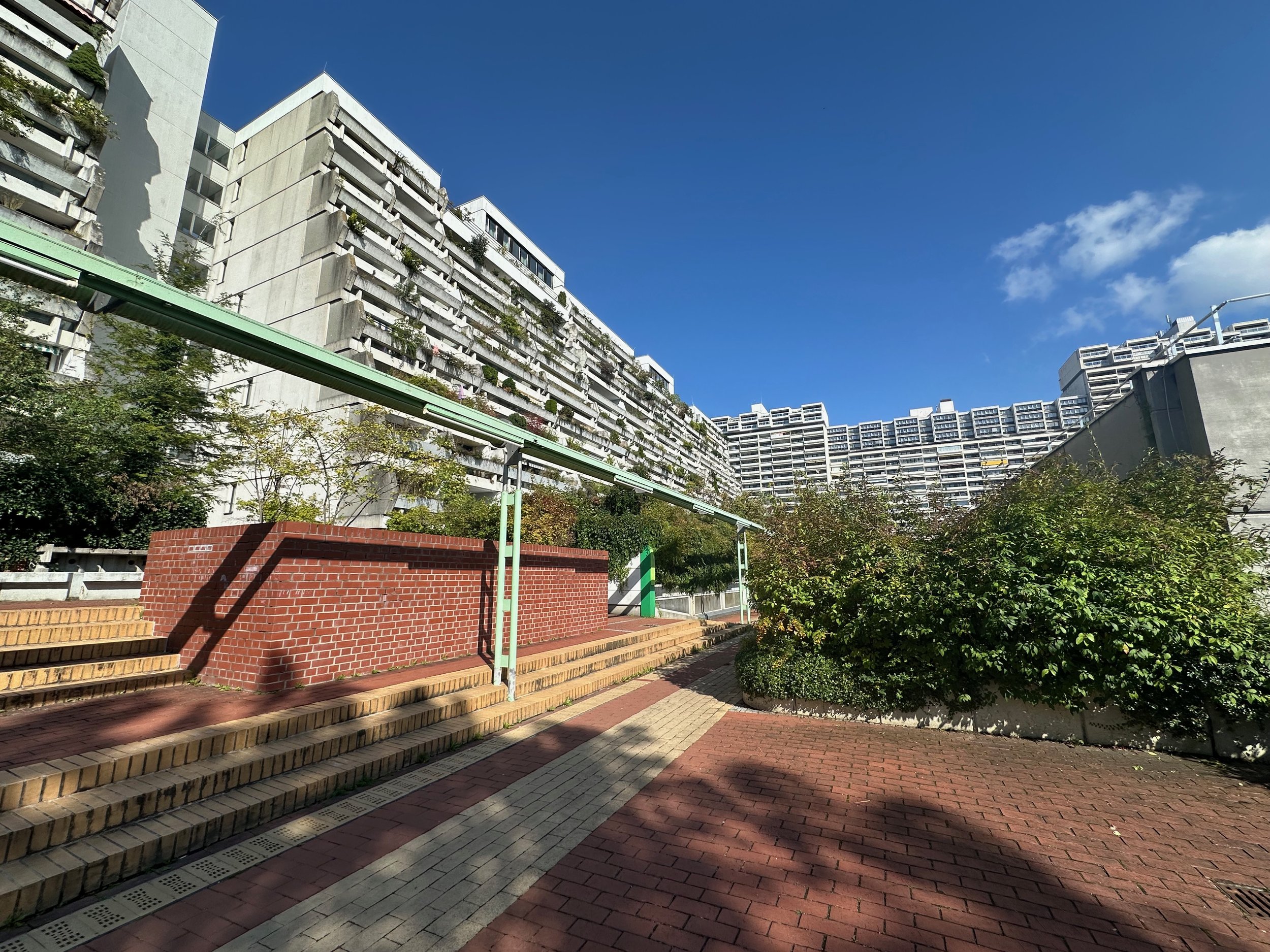
It is the first historical event I can personally remember. The geometric, brutalist architecture of the village, glimpsed in grainy television footage, burned itself into my memory cells and has remained there ever since. The confusion surrounding the events, as conveyed by the television news at the time, gave this nine-year-old his first sense that the adult world must be a very complicated place indeed.
The walking route from the hotel to the BMW Plant Munich, where I am due to take a factory tour, leads through the heart of the village. Designed by the architectural practice Heinle, Wischer und Partner, it was conceived as a showcase for modern residential construction and urban planning. Vehicle and pedestrian traffic are separated entirely: cars are confined to a subterranean road network, while pedestrians and cyclists move along pathways that weave through parkland and between the buildings.
You do wonder whether Messrs Heinle, Wischer, and their partners would ever have chosen to live there themselves, though, because it can feel like a claustrophobic warren of paths, tunnels, and footbridges. Or perhaps that reaction stems from the fact that it looks almost exactly as I remember it from fifty-two years ago—and from what happened there.
Regardless, it is well maintained, peaceful, and possessed of a genuine sense of permanence and contentment. The residents must, of course, be conscious of the village’s tragic history, but perhaps they have simply arrived at the healthiest conclusion possible: to acknowledge the past for what it was, and then move on.
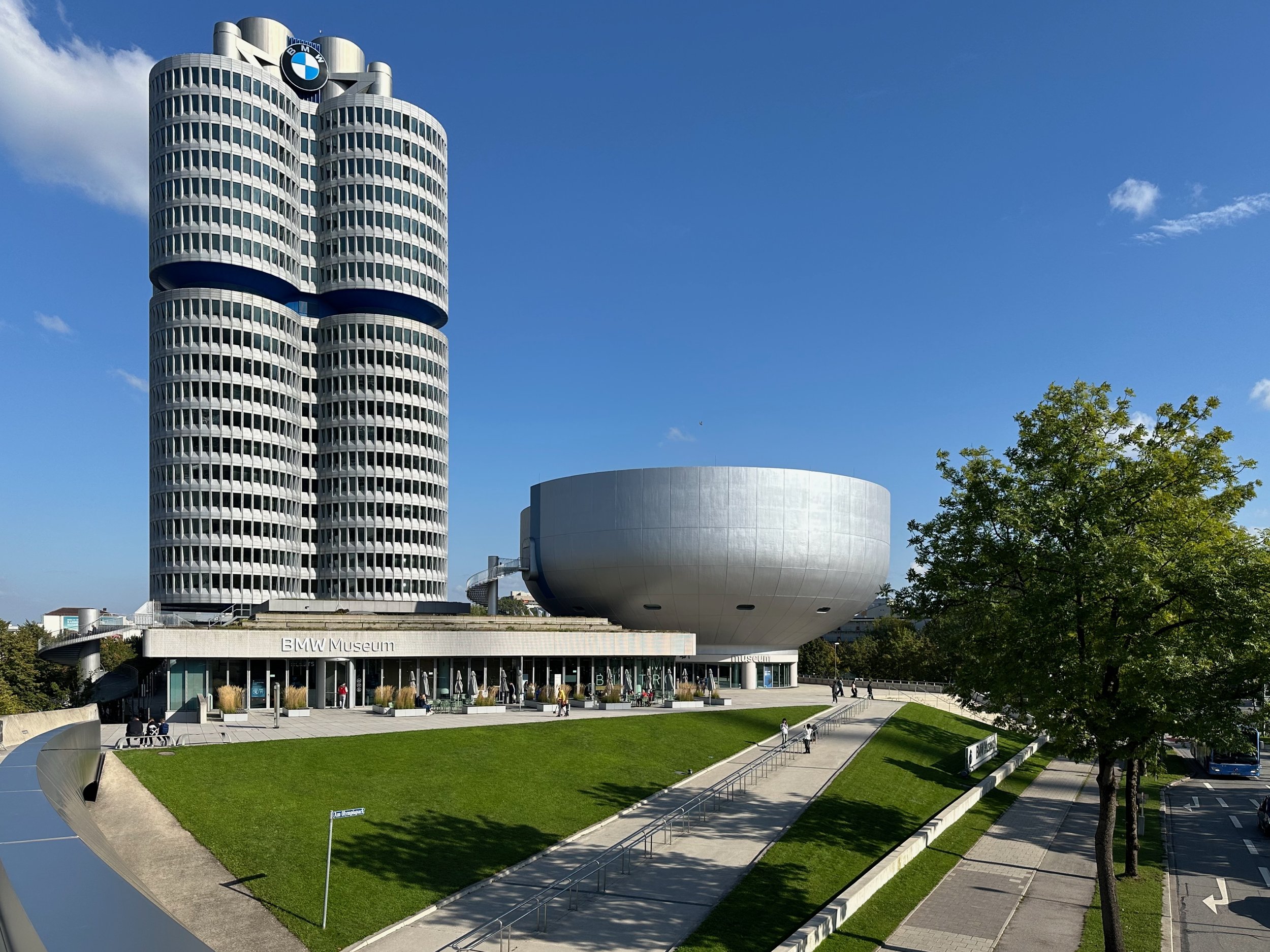
At BMW, I collect my ticket for the factory tour only to discover that I have somehow booked myself onto the German-language version. For health-and-safety reasons, only German speakers are permitted to join it.
I queue up anyway behind three visitors from the Far East and watch with interest as a Fräulein interrogates them in German, receiving only polite nods in return. She then switches to English, but they do not understand a word of that either and simply drift past her while she insists they cannot join the tour. Charming.
I am next and venture: “Ich habe ein bisschen Deutsch. Vor fünfzig Jahren in der Schule.” This stretches my linguistic abilities well beyond their natural limits.
“I think it is OK,” she replies, exasperated and barely concealing a wince.
So I take my place for an introductory film followed by a two-hour tour of one of the production lines at the BMW Dingolfing Plant. Much of the manufacturing process is self-explanatory, but I probably miss eighty per cent of the commentary. Still, that is twenty per cent more than the other interlopers managed.
The factory itself is a fascinating blend of ultra-high technology and traditional craftsmanship. Sheet steel is transformed into elegant body panels through the brute force of 5,000-tonne presses. Workers then painstakingly align the components before a fleet of robots—more than a thousand of them—descends in balletic synchronisation to apply precise welds in three dimensions.
And so the process continues until final assembly in what resemble traditional workshops, albeit exceptionally clean and organised ones rather than the usual grease-monkey’s lair. Here, workers select lights, seats, steering wheels, dashboards, and countless other components from neatly ordered bins before fitting them manually into place. They resemble DIY mechanics without the swearing..
Finally, the gleaming finished cars are started, subjected to a last round of diagnostic checks, and then driven to a holding area. Having seen the entire end-to-end process, I am amazed the cars do not cost even more than they already do, given the sheer capital investment and manpower required to build them.
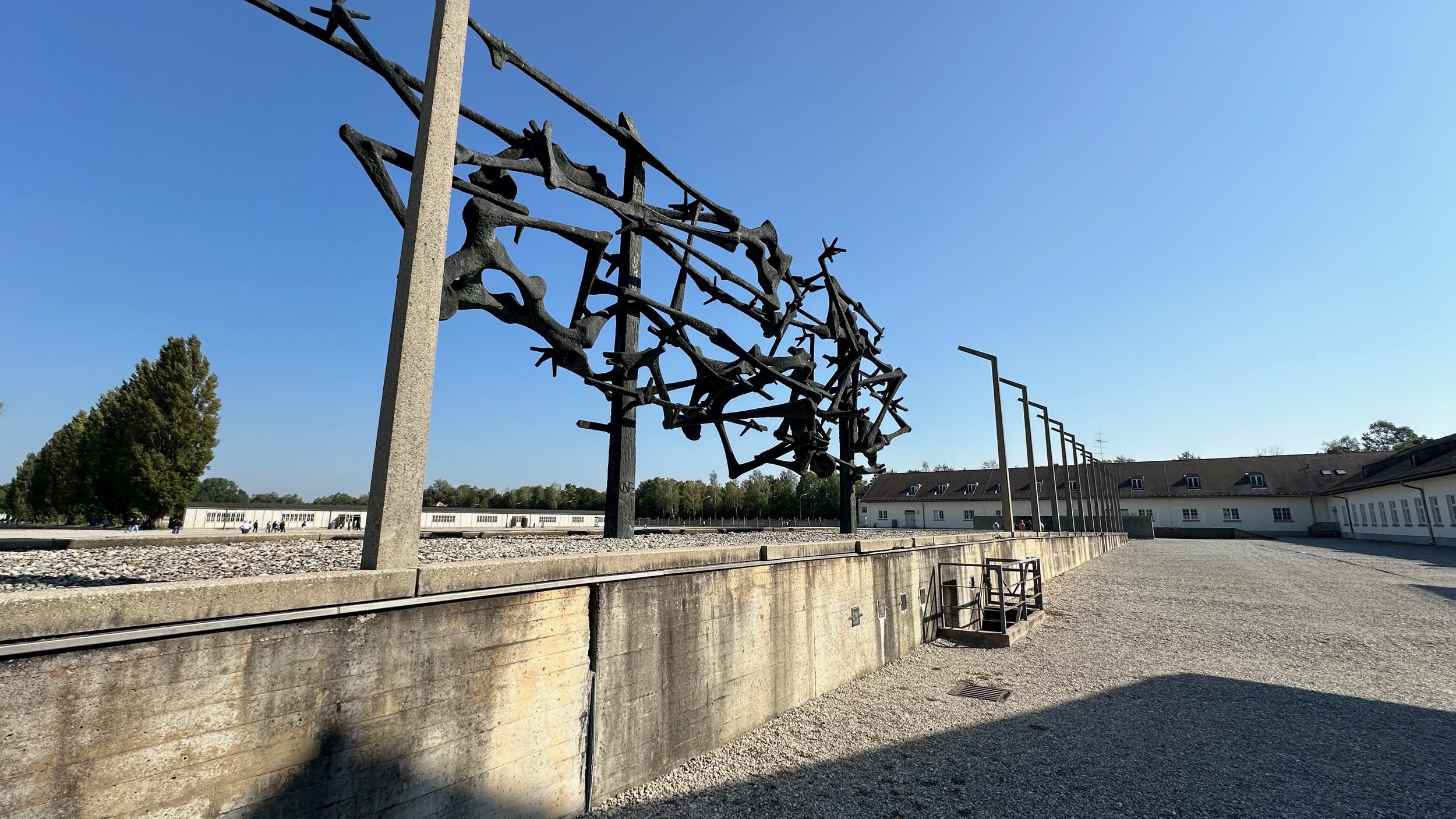
The next morning, we ride a further nine miles north of Munich to the Dachau Concentration Camp Memorial Site.
I had visited once before and was struck at the time by how sanitised the presentation felt, with considerable emphasis placed on the fact that Dachau was not one of the notorious extermination camps. Since then, the curatorial approach appears to have changed. The experience is now far more direct and unflinching: an overwhelming accumulation of grim facts, statistics, photographs, and testimony describing brutality and suffering on an almost unimaginable scale.
There are no words I can add to this subject that have not already been written many times before, other than to say that visiting Dachau now may be more relevant than at any point in recent decades, given the resurgence of extremist ideologies across Europe.


