Salzburg
17 September

The Grossglockner—literally “Big Glacier”—is one of the most stupendous natural sights I have ever seen. It is also among Austria’s best-known landmarks and one of the country’s most visited tourist attractions, yet remains surprisingly little known outside Austria itself.
I had been looking forward to seeing it again after seventeen years, albeit with a degree of trepidation given the damage climate change has inflicted across the Alps. Many ski resorts, for example, are now heavily reliant on artificial snow and operate for ever-shortening seasons.
The €31 toll is almost as steep as the 48-kilometre road itself, but both the scenery and the bends are unquestionably worth it. Unfortunately, heavy rain and freezing temperatures have forced the road to close, which is particularly galling because late summer has suddenly returned, bringing pale golden sunshine and temperatures back into the mid-teens. In other words: perfect conditions.
No matter. The route from Cortina d'Ampezzo to Lienz and then north towards the Felbertauern Tunnel is itself a never-ending masterpiece of road-building brilliance, much of it looking as though it had been resurfaced only yesterday.
How these Alpine nations manage to keep their roads in such immaculate condition, despite the punishing climate, comes down to one simple fact: maintaining infrastructure is treated as a political priority. In the UK, it plainly is not.
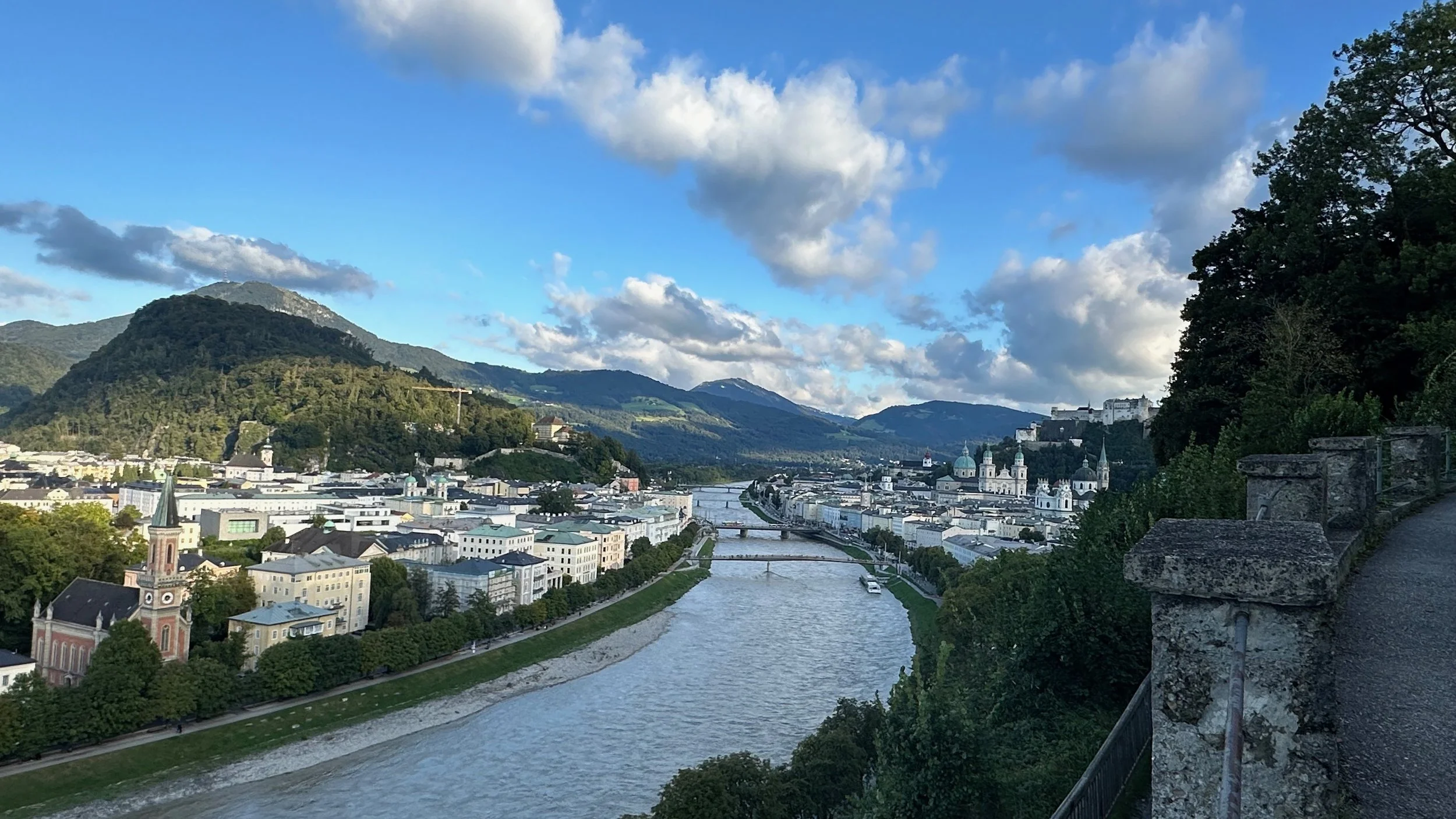
Think Salzburg and thoughts naturally turn to Wolfgang Amadeus Mozart and The Sound of Music. Not the seemingly never-ending drab hinterland that begins around Zell am See, some thirty miles to the south, and which appears representative of much of the wider Salzburg region.
Still, it is worth battling through the traffic because perched atop one of the hills overlooking the city is the modestly priced yet magnificently over-named Hotel Johannes Schlössl Gästehaus der Pallottiner am Mönchsberg. Perfectly agreeable it is too, although it resembles an exceptionally well-run youth hostel.

Better still, it is only a fifteen-minute stroll downhill: first to the beer garden of the Augustiner Bräu Mülln and then onwards to Esszimmer, a single-Michelin-starred restaurant tucked away on an otherwise unremarkable street.
Thankfully, diners are not railroaded into a lengthy tasting menu, although those are available at €155 or €185 per head should you wish. Instead, you are free to mix and match from the two menus, ordering what you like and in whatever sequence you prefer—albeit with some gently expressed guidance from the staff.
The result is far more satisfying: fewer courses perhaps, but portions substantial enough to feel like proper dishes rather than fleeting tastes. Special mention must go to the wine list, which was exclusively Austrian and astonishingly good, every glass recommended by a hostess of immense charm and professionalism. At €36 for four generously poured glasses, the pricing felt remarkably restrained.
The food itself follows an unusual formula. The ingredients are classic—salmon, langoustine, turbot, lamb, oxtail, and the like—while the preparation displays an almost Germanic precision: exactly one millimetre of my salmon had been cooked, leaving the remainder raw like sushi.
Most surprising, though, were the subtle eastern influences woven through the menu. The lamb shoulder component of my main course arrived in the form of a Japanese-inspired gyoza, while the broth accompanying a pair of langoustines carried a delicate hint of curry.
At around €180 a head, it is hardly inexpensive, but one can pay far more for considerably less. Crucially, Esszimmer has avoided the fate of many single-starred restaurants that serve up broadly interchangeable cuisine regardless of where they are in the world. This is a genuinely world-class restaurant that still wears its regional identity proudly on its sleeve.