Bavaria & Thuringia
19 & 20 September
Being taken fast up the Romantische Straße sounds like the sort of line Kenneth Williams might have delivered, nostrils flaring, in a Carry On film series. But it does neatly set the scene for the next couple of days.
The Romantische Straße itself, however, is more tourist-board invention than ancient historic route, dating only from around 1950, when West Germany was seeking economic revitalisation after the war.
Encouraging tourism to medieval towns such as Würzburg and Dinkelsbühl, along with castles like Neuschwanstein Castle, was one means of achieving this. The Romantische Straße was therefore created and promoted as a scenic route linking them together.
As a result, it is really a mixture of rural roads and trunk routes that vary from merely adequate to genuinely excellent. In many respects, it resembles Scotland’s North Coast 500, albeit considerably less crowded.


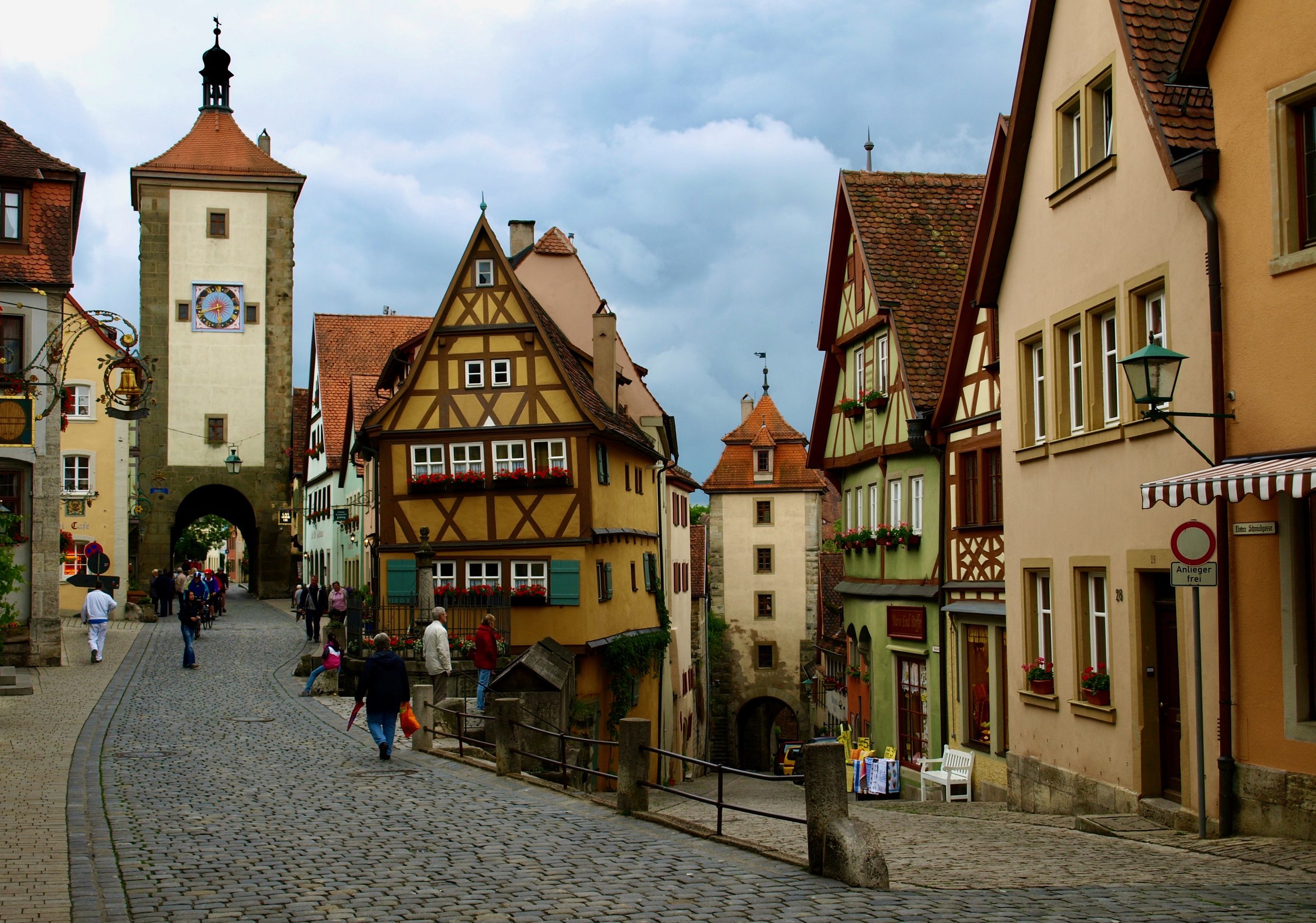
The most famous of these towns is Rothenburg ob der Tauber, the quintessential postcard Bavarian town, located roughly three hours from Munich in the heart of the state.
Perched on a low hill above the meandering Tauber, it is maintained with such fastidious care that it can appear almost unreal—as though Disney had constructed it last year as part of an elaborate theme park—despite parts of the historic centre dating back to the thirteenth century.
Sitting in the cobbled Marktplatz, drinking pre-dinner steins of Pils in the early evening sunshine, surrounded by American tourists, does much to sustain the holiday mood.

The rule of thumb, dining-wise, used to be that a Michelin Plate symbol indicated a genuinely excellent meal—often authentic to the region—at a relatively unambitious price point. Something, however, seems to have changed over the past couple of years, because three consecutive nights of following this credo will land us with combined bills totalling €1,100. Yes, wine was involved, but only a little over half a bottle each night, plus an aperitif. And perhaps the occasional digestif…
To be fair, all three meals have been excellent. Vinothek by Geisel at the Hotel Excelsior Munich the previous evening was every bit as good as on my two earlier visits, although the format has changed. It used to revolve around a series of smaller plates offering both variety and decent value; now it follows a more traditional structure, with starters beginning at around €25 and main courses nearer €40. The wine service remains knowledgeable and inventive, though this too comes at a price.
Tonight, we visit HerR, run by chef Sascha Bungeroth and his front-of-house sidekick, a supremely charming showman whose name escapes me. Sascha has trained under many of Germany’s uber chefs, and he really can cook. Winningly—and with no trace of false modesty—they are utterly convinced they will be promoted from Michelin-listed to starred status next time around, and it is difficult to see why the Clermont-Ferrand mafia would deny them that recognition, although Michelin’s judgments increasingly feel somewhat arbitrary, particularly in London.
On every level, cost included, HerR comfortably matches the standard of Michelin-starred place we visited a couple of days earlier. but nearly two years, in May 2026, they still don’t have the coveted star…
Tomorrow, northern Bavaria will give way to Thuringia, bringing kilometre after kilometre of sweeping roads threading through and above dense forests. They are not remotely challenging to ride, but intensely relaxing, thanks in no small part to the immaculate road surfaces. The few people with whom you have to share them are, by and large, swift, competent, and civilised drivers.

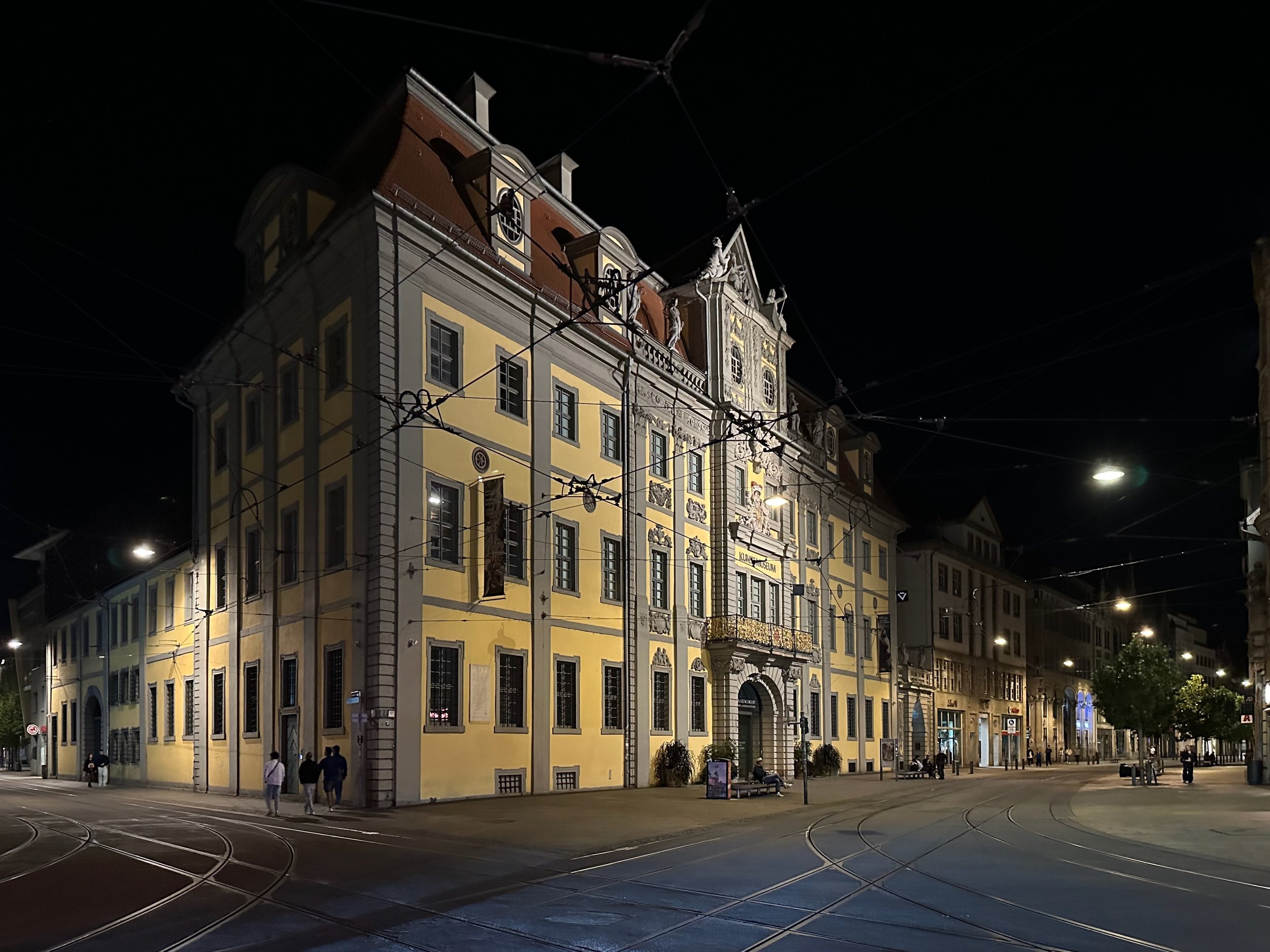
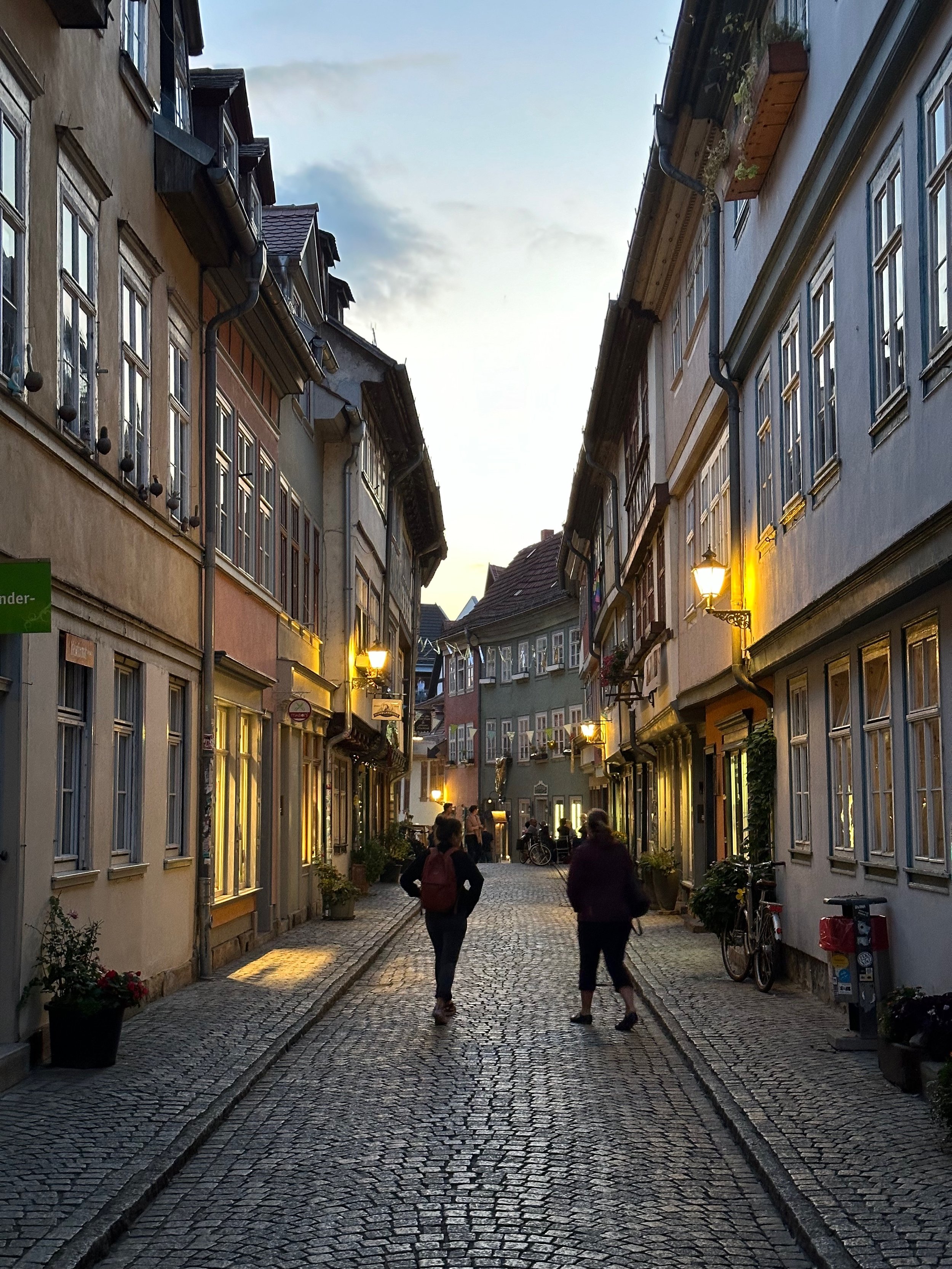
The bars around the Krämerbrücke—a sort of medieval Ponte Vecchio—are heaving as the sun begins to set, and we thread our way through the maze of narrow streets towards Estima by Catalana.
Run by a single-minded German with an obsession for Catalonian produce, there is no doubting either his commitment or his skill. But there comes a point where the delicate balance between price and value drifts too far out of alignment.
For me, that point arrived after three and a quarter hours when we were presented with a bill for €420. In return, we had received four small dishes each, four very small glasses of wine—think 100ml pours—and a wickedly good brandy costing €17.50 for what I suspect was barely half a standard measure. Lovely food, certainly, but value still has its place.
Did we properly research these three cities in search of better-value alternatives? And did we question the price of any of the wines that were recommended to us?
Err… no. On both counts, we probably have only ourselves to blame.
But which online sources can you genuinely trust? Certainly not Tripadvisor, where many of the authentic reviews appear to have been written by people who are simultaneously cost-obsessed and borderline illiterate. As for the fake ones, they are often so transparent as to be unintentionally hilarious.
I suppose there must be reliable food writers somewhere—though I still dislike the term “food blogger”—but separating the wheat from the chaff is another matter entirely. No, I will probably continue returning to the Michelin Guide website and simply endure the occasional financial spanking.