Mosel Valley, Ardennes again & Flanders
23 & 24 September
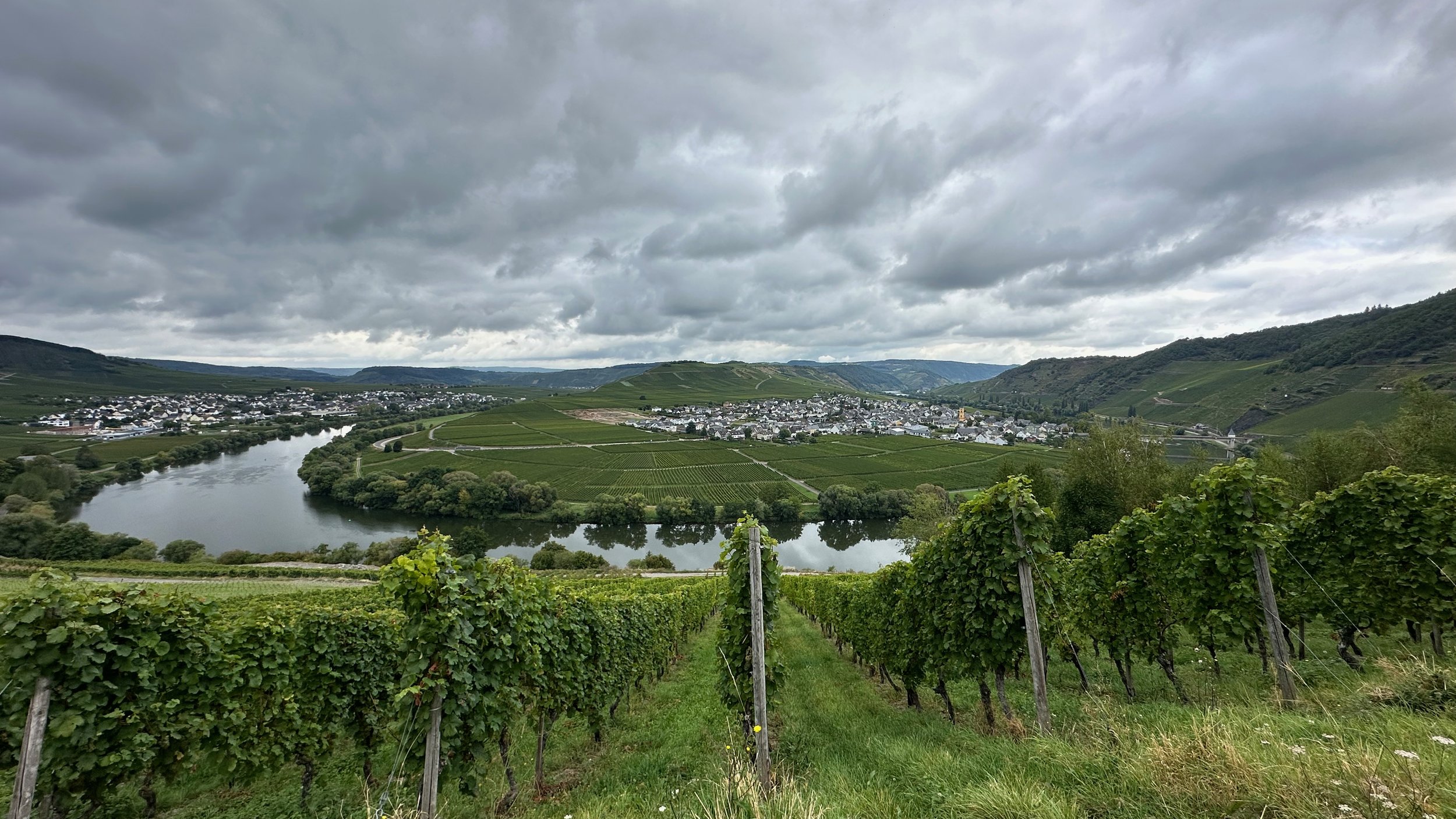
To misquote Thomas Gray, the way home starts by slowly wending through the Moselle Valley’s Weinstraße: an eighty-mile meander tracing the course of the river through a limestone gorge carved out over the last fifty million years.
Progress is slow only through the numerous schön towns lining the riverbanks. A later squint at the Michelin Guideconfirms an abundance of promising addresses at which to stay and eat well. If travelling in either direction, aim for one of these places somewhere between Trier and the dreary Koblenz.
A recent edition of Bike, dedicated to curvy roads in Britain and abroad, recommended several routes in northern Luxembourg, so I veered off to investigate. They make an entertaining alternative to the motorway if, like me, you are heading towards the Ardennes with an entire day available to get there.
Given the magazine’s editorial obsession with bendy roads, I am rather surprised it failed to mention the Route de Bastogne. I cannot think of a better sequence of absurdly fast curves anywhere in mainland Europe. It may be all too brief at under ten miles, but it is bookended by the roads featured in Bike at one end and Belgium’s excellent network of entertaining secondary routes at the other.
Very much worth seeking out.

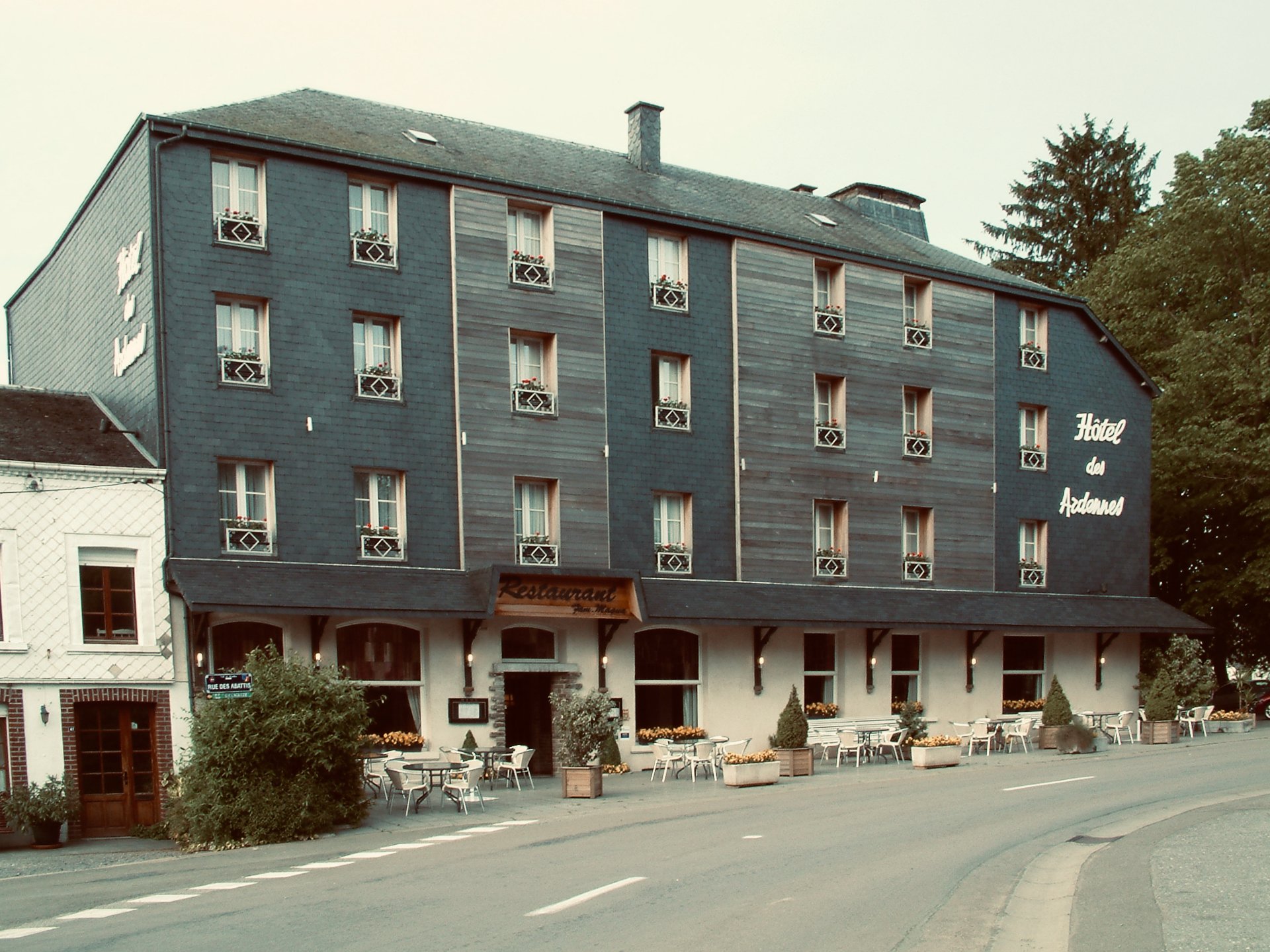
Our first visit to the Hôtel des Ardennes was twenty years ago. On that occasion, the sommelier shook his head sorrowfully at the heroic quantities of wine the three of us had consumed with our elegant dinner, before we retired to the bar for a cleansing Godfroy or four.
These days, he is still there, albeit in a less demanding role—more ambassadorial than operational—and it suits him well. He has aged gracefully and has been present on every subsequent visit, always greeting me with a nod and the faintest trace of a smirk.
Behaviour and alcohol consumption may mellow with age, but the Hôtel des Ardennes remains exactly as it always was. On Sundays, Mondays, and Tuesdays, only a fixed-price, no-choice dinner menu is offered, but at €45 it represents excellent value. The menus become more opulent—and more expensive—later in the week, though the kitchen wisely sticks to the classics: foie gras, Dover sole, lamb, beef, venison, veal, followed by a faintly flouncy dessert and an optional cheese course.
Bloody brilliant it is too.
Regardless of the day, the hotel remains a model of restrained elegance and tranquillity. While hardly a budget option, the roughly €200 cost for dinner, drinks, bed and breakfast in a single room represents genuine value when compared with the €150 even a skinflint would probably spend on a vastly inferior evening elsewhere in this part of Belgium.
On that first visit in 2004, there was a young man working in the dining room. He is now forty-two and has become the fourth generation of the Maqua family to run the hotel. They have appeared in the Michelin Guide for thirty-three consecutive years—longer than any other establishment in Belgium.
A few years ago, we met an elderly English couple staying there. He was a retired architect; she still worked as a travel and food writer. They toured in one of those late-model Rovers that attempted to resemble a Bentley and carried with them the unmistakable air of extras from Downton Abbey.
They urged us to keep the identity of the hotel quiet. This, they explained, was where they came to relax and spend their own money after enduring the sybaritic excesses that accompanied life as a journalist with a public profile. Now that is a high-class problem.
I rather suspect they are both now late of this parish, and so I humbly beg their forgiveness for blabbing about the Hôtel des Ardennes. There: I have said it, and I shall say it again—Hôtel des Ardennes in Corbion-sur-Semois.
Just do not get drunk before, during, and after dinner.
Poor form.
Grey skies and wet roads the following day, on the way to Ypres, provide time to reflect on the last fourteen days—and the last forty years. The conclusion feels inescapable: Europe has grown old, and so have I.
It has also become busier, and the two observations are not unrelated. Twenty years ago, travelling across the continent carried with it a sense of freedom and open space. Now, much of that space seems filled with old people.
Like me.
The demographic tragedy that has befallen much of Europe is that the only people with any disposable income are increasingly older. We grumpily travel outside school holidays to avoid the endless procession of motorhomes filled with wholesome-looking Dutch parents and their fresh-faced children, all while lamenting how grey the world has become.
In my case, I am merely one of thousands of ageing bikers trying to overtake ageing German Mittlere Führungskräfte, their bony fingers grimly clutching the steering wheel of a 2003 Mercedes-Benz E-Class—no doubt once part of an early-retirement package and retained ever since as a lingering symbol of diminished status and authority.
This year, I feel the contrast particularly keenly, having recently returned from what was almost certainly a once-in-a-lifetime, deeply life-affirming 16,500-mile odyssey around United States and Canada. Travelling largely alone meant encountering a wonderfully varied cast of characters. Most were ordinary Americans, but among them appeared retired cannabis growers, cult members, political obsessives, and adult film performers. All reinforced my long-held belief that the United States remains one of the most open and welcoming places on Earth.
It also helped that they all spoke English—or at least a version of it I could understand. That is one dimension I miss in Europe as a consequence of my own shamefully limited language skills.
Inevitably, Europe now feels slightly smaller, somewhat crowded, and increasingly over-regulated. Clearly, the continent is geographically unchanged, so this perception is entirely relative to North America. And I can hardly complain about overcrowding when I myself form part of the problem.
Regulation, however, is another matter. Since the pandemic in particular, there has been a dramatic increase in petty restrictions, surveillance, and bureaucratic meddling introduced in the name of public order and safety.
Regardless, France, Belgium, Germany, Luxembourg, Switzerland, Italy—Old Europe, if you like—remain part of a glorious patchwork of memories stretching back to 1985.
Three of us sat in the back of the car while my friend’s parents occupied the front seats, listening to a home-recorded TDK SA90 cassette containing the two albums that seemed to be everywhere that summer: Dire Straits ‘Brothers in Arms’ on one side and Sting’s ‘The Dream of the Blue Turtles’ on the other.
Looking out of the window, I idly wondered what the next forty years might bring.
Now I know.
And I remain profoundly grateful for how those years unfolded, while mindful too of the friends, time, and future inevitably lost along the way.
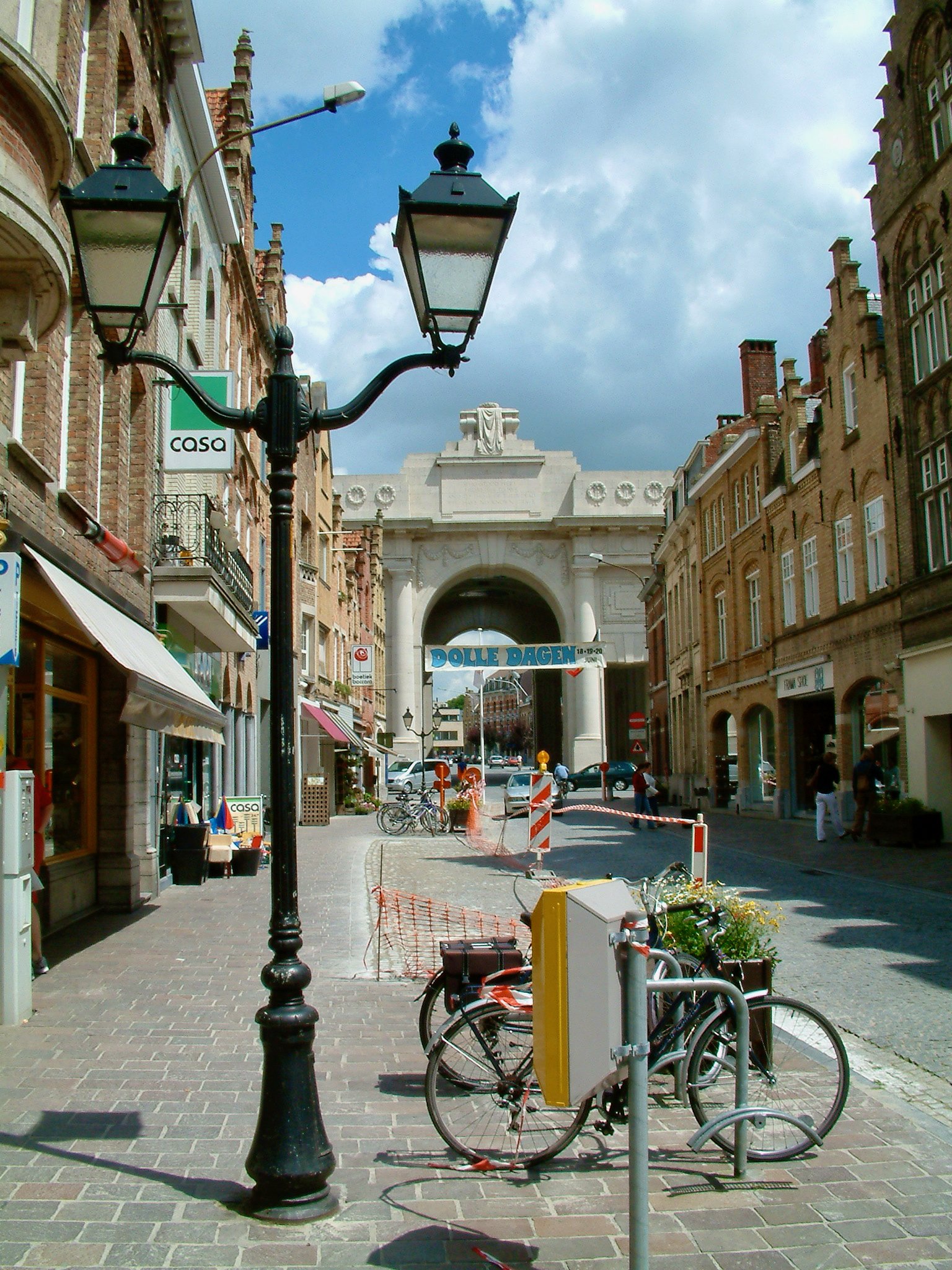
And there are few better places than Ypres in which to reflect upon the good fortune of having been born in Western Europe in the latter half of the twentieth century.
The Saint Arnoldus beer bar sits only a few yards from the Menin Gate. It has outdoor tables where one can sit, sip a 7.5 per cent Tripel, and gaze towards the memorial—even if it is currently swathed in scaffolding during restoration works.
At the eastern edge of this beautifully restored town, the site was chosen because hundreds of thousands of men passed this point on their way to the battlefields beyond. The memorial bears the names of more than 54,000 officers and soldiers whose graves are unknown.
Men who never benefited from cradle-to-grave healthcare. Men whose potential was never realised through free university education. Men who never experienced the fastest sustained rise in living standards in recorded history. Men who took up arms without question when asked to do so—and then did so again a mere twelve years after the Menin Gate itself was completed.
It remains the lasting proof that, whatever its failings and however imperfectly realised, the European Union has been a spectacular success when measured against its original purpose. Somehow, the countries on opposing sides of these catastrophes managed not only to reconcile but also to create the foundations of peace and prosperity that have endured ever since: an imperfect but extraordinary example of secular, capitalist democracy.
And to those who casually assert that “this would all have happened anyway”, five hundred years of European history suggests otherwise.
So yes, of course I shall return to these countries again and again—but perhaps now with a different purpose, and with expectations recalibrated for what they are today rather than what they once were.
There is still much left to explore and the light is fading slowly from the screen. The remoter regions of Spain and Portugal are an obvious starting point. Eastern and south-eastern Europe another. Northern Europe too, for all the reasons already mentioned. And Greece remains entirely uncharted territory for me.
It all still has to be done.
After all, the future is not what it used to be.


PS: Most of the photos on this post date from that original tour in 2004. The weather was better back then…